|
Jiaming Chu (褚嘉明) I'm a master's student in Electronic Information at Shanghai Jiao Tong University (2025–present). I received my B.Eng. in IntelliSense Engineering from Harbin Institute of Technology in 2025. I'm interested in generative models, large language models, 3D/4D reconstruction, and world models. Going forward, I want to explore combining generative models with 3D/4D reconstruction. |

|
Research |

|
VGGT-Splat: Feed-forward VGGT Poses vs. COLMAP for 3D Gaussian Splatting, from 8 Frames to All
Jiaming Chu Independent research project, 2026 project page / code A controlled experiment on 6 scenes × 8 / 16 / 32 / all frames: with few frames COLMAP fails on most scenes while VGGT never does; with all frames COLMAP leads by 2.1–4.6 dB on five of six scenes, likely because VGGT's poses are less precise, not because it covers less. A VGGT depth prior reshapes the geometry but barely changes novel views, since the few-frame bottleneck is unseen regions. |

|
PoseGuard-NeRF: When Does Joint Camera-Pose Optimization Help NeRF, and When Does It Just Move the World?
Jiaming Chu Independent research project, 2026 project page / code A controlled experiment with 45 vanilla-NeRF runs (9 pose-noise levels × 5 methods): a camera learning-rate warm-up lets joint pose optimization recover much of the quality lost to noisy poses (14.1 → 22.7 dB at 5% translation noise), yet enabling naive pose optimization from perfect poses drops PSNR from 27.1 to 17.9 dB. A Sim(3) fitted on training cameras alone recovers +5.5 dB, showing that most of the drop is global coordinate drift rather than a worse reconstruction. |
|
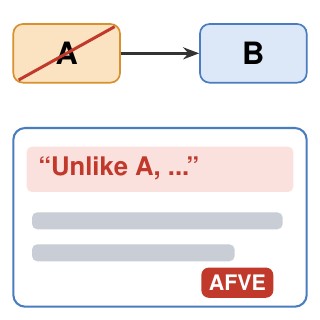
AFVE-Bench: Measuring Abandoned-Frame Verbalization Errors in Multi-Turn LLM Revision
Jiaming Chu Preprint, 2026 arXiv When a user replaces an earlier frame mid-dialogue, a revision can adopt the new target yet still expose the abandoned one. A benchmark of 192 matched four-turn English and Chinese dialogues, with 4,204 doubly annotated responses from 11 model configurations: 25.5% of history-conditioned responses commit this error, and 19.8% of the ones that pass the target still verbalize the old frame, mostly through contrastive framing. |
Skills
|
|
Last updated: November 10, 2026. Website template from Jon Barron, thanks! |